Front Of House: The Backbone of Indian Concert Culture
While India’s music festival boom strongly echoed across the country, here are the people who silently hold down the fort


(L-R): Aaquib Wani, Nikhil Udupa, Kartik Kher, and Rushi Honmore
Live music is the closest one can get to experiencing magic. Time warps gently as light beams bounce off playfully, while the artist controls the crowd with sonic sleight of hand.
But beyond the glow of dream headliners and specially curated showcases, the real machinery of it all is being powered by an army of on-ground creatives and operators working tirelessly behind the scenes.
Responsible for the magic we witness on stage, they silently absorb the shocks, fix the gaps, and hold down the fort. Here, chaos is close to second nature: Stylists would be dressing artists minutes before showtime, while production teams are solving last-minute logistical hiccups. Photographers, running on caffeine and adrenaline, are capturing fleeting moments amid the madness, while stage designers respond to client demands.
Behind every sold-out show and viral festival reel, these are the people driving forward the architecture of live music.
Aaquib Wani, the Artistic Innovator

While other kids his age were playing with toys, Aaquib Wani was trying to create his own using thermocol and DIY crafts. Being exposed to artisanal intricacies, whether it was his father’s Kashmiri art business or drawing lessons at school, Wani became increasingly fluent in the language of craft. Away from lectures and exams, he was charting his own course, using self-taught techniques to learn the fundamentals of design, craft, and even music for that matter. “I knew early on that I loved creating and completely hated studying. I failed 11th standard twice, and art was always the one place I kept returning to, even though I had no idea it could become a profession. 12th standard was pretty much the last time I properly held a book,” he cheekily added.
Cut to the present: Wani is one of the country’s most versatile Indian Creative Directors and designers, who has not just set the visual foundation for festivals like Lollapalooza India, but also designed jerseys for the Indian Cricket team.
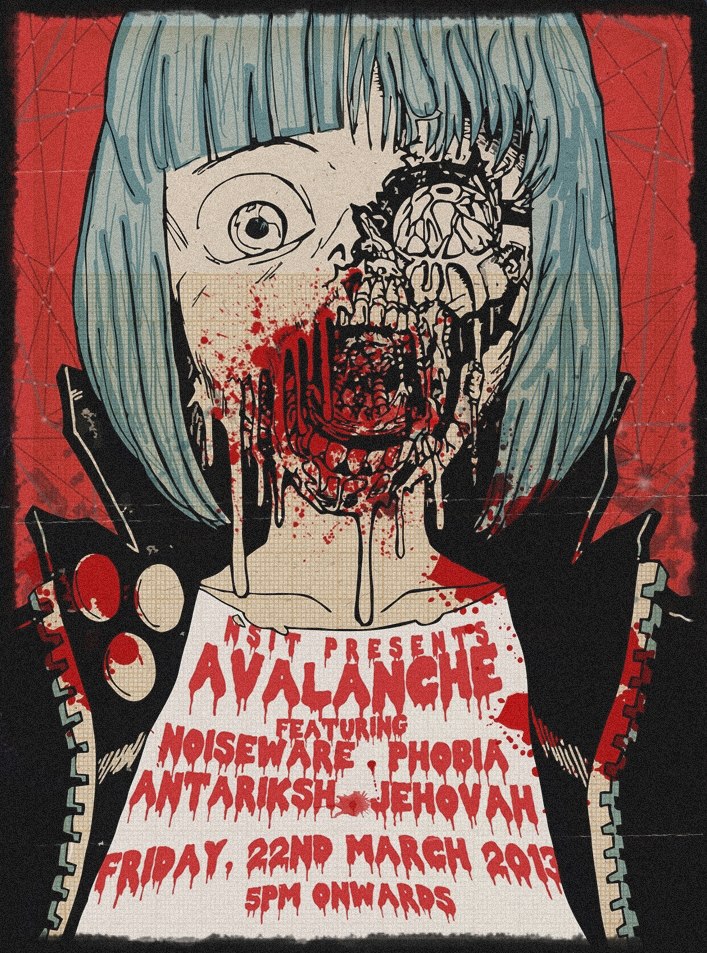
Wani’s artistic journey, too, rests on sonic foundations. Surprisingly, he landed his first gig through his own metal band, Phobia. In typical indie artist fashion, he started designing his own gig posters. After that, there was no going back. Graphic design snowballed into spearheading editorial and design projects for large-scale festivals and publications, such as Rock Street Journal. “The energy of that world shaped how I see things; my taste, and my instinct for storytelling, and that influence is still at the core of my work today,” he added.
Instinct, along with the mystic combination of “right place, right time,” became a driving force in fortifying Wani’s artistic trajectory. More than anything, he was looking to not just helm projects but build worlds along the way. A leap of faith landed him in the larger-than-life field of spatial design. “The scale was overwhelming in the best way. It felt like a playground where ideas could take physical form, where your work could surround people instead of just sitting in front of them. I loved the scale, the chaos, the adrenaline.”
Building Worlds, Not Festivals

BookMyShow Live
Wani’s style boils down to uncovering the overarching narrative. “Every festival has a world hidden inside it; the trick is uncovering it. I’m obsessed with finding the emotional spine of a space before touching aesthetics,” he reflected. The initial process is almost meditative, where he and his team enter the client’s psyche. “Whys” and “hows” are stripped to their core essence. Visual cues, ranging from typography, motifs, and graphic vernacular, begin to take shape.
While global music festivals shuttle between clichéd futuristic, chromatic, and glitchy iconographies, Wani and his team look inward into India’s rich cultural tapestry. Built with maximalist hues, craft-laden textures, complex compositions, and geometric motifs, the work makes you pause with intent. Even with its innate grandness, it doesn’t overwhelm but rather invites you to take a closer look. “Design should build a world, not borrow one that already exists,” Wani firmly stated. Bound by the invisible thread of coherence, all the assets are fashioned as jigsaw pieces that complete the main puzzle —the music festival. “The poster, the online ticketing banner, the walkway tunnel, the map, even the reusable cup should feel like pieces of the same universe.”
Experiential Ecosystems
An avid observer of contemporary festival standards, Wani also noted the evolution of concert production. What used to be just a mainstage with flashing lights has now transformed into an expansive playground of experimentation, integration, and innovation. Think modular designs, tech-infused gear, and sustainable equipment, while theatrics like lighting, visuals, and performances further elevate the mood. Behind the tectonic shift lie brands and sponsors, who, along with designers and artists, are curating culture-first, experiential activations.“India is catching up fast. Audiences here are far more aware and demanding now. The old formula of lights and a big stage is no longer enough. Everyone is participating to give audiences an experience of a lifetime, and that’s what makes this moment genuinely exciting.” Wani added.
Backstage Madness
or the audience, concerts are a momentary spectacle, but what they don’t see is the months of permissions, vendor negotiations, design iterations, last-minute delays, and prolonged onsite work hours that go into it. “People think this field is glamorous because they only see the final output. Spatial design isn’t just about having ideas. It’s about understanding structure, fabrication, safety, sound, lighting, crowd movement, and still making it feel intuitive.” From dealing with last-minute cancellations to learning things beyond your skillset, production is not for the faint-hearted. “When things fall apart, you don’t wait for solutions; you become the solution. You get your hands dirty, take responsibility for things that aren’t technically yours, and make sure the experience still happens,” Wani stated.
While he has been at the forefront of the Indian music festival surge, Wani urges the system to revisit the basics. Apart from treating staff and crew members well, he also wishes to see infrastructural changes implemented, along with healthier timelines and budgets to be set in place. “The industry is growing at a rapid pace, but the systems around it haven’t caught up. I’d love to see the ecosystem become smoother, more collaborative, and more future-focused. India’s live entertainment scene is bursting with potential; it just needs the right support to truly thrive.”
Nikhil Udupa, The Festival Orchestrator

Nikhil Udupa’s journey did not begin in boardrooms or client meetings, but on festival grounds. Former marine engineer, full-time fan, Udupa savored the adrenaline surge while headbanging to underground metal and punk gigs from the audience. He also made lifelong friends through festivals and online forums along the way, who continue to thrive in the music industry even today. An avid admirer of the scene primarily, he still carries that unbridled passion with him. “We were all kind of outcasts and misfits. We were fans before the internet, social media era, or, you know, everything. I think that’s what kind of drives us.” Switching from PR and marketing to finally entering events, Udupa is the director and co-founder at 4/4 experiences, an entertainment think tank that focuses on building music and subculture-led IPs for brands, along with production and show running services for live music experiences.
Building Visions from the Ground Up
Primarily driven by a community-first approach, Udupa laid out the arduous process sans the frills and hype. “It’s actually a mammoth logistical exercise which needs to be held together tightly; it takes a fucking village,” he said. Booking an artist is just the tip of the iceberg. It’s only after the date and venue are locked that the real grind begins. Like levels in a video game, each expedition comes with its own challenges. Client expectations are scattered across spreadsheets and endless vendor calls, while design elements, standard stage builds, and tech packs are finalized in parallel. As festival formats continue to evolve, so does the thinking around how audiences move through, engage with, and visually experience these spaces. “People have started preferring open designs (i.e., different positions, multiple smaller stages), where there’s a lot more focus on visibility. We see the artists using the stage mostly as a backdrop.” Side by side, on-ground operations, consisting of housekeeping, ticketing, security, and F&B, are also laid out in detail, while marketing and communications keep the seamless flow of information going across channels.
Being a silent witness to live music’s transformation into a lucrative ground for content creation, he reflected upon the cyclical, short-lived nature of such trend cycles. “This is the sign of our times,” he stated.” In our age, we pirated, but we are freaking proud about it. Each generation has its own thing. Social validation is what drives people right now; there is no right or wrong thing about it. As long as it leads to a better concert and experience, I’m good.”
Community Over Clout
Undeterred by the gloss of hype-driven markets, he urged a serious shift in focus for delivering well-rounded audience experiences. Highlighting his personal observations, he stressed certain infrastructural loopholes, such as overcrowded fan pits, long queues, compromised safety, and more, that have become recurrent bottlenecks in the Indian context. “I think that our infrastructure needs to catch up with our ambition. We take people who work on events for granted far too easily,” he reflected.
Unfazed yet passionate, Udupa rarely sugarcoats. “The event business is merciless and heartless; I’m going to tell you point-blank.” Despite the ups and downs of on-ground chaos, Udupa says his commitment towards his crew remains consistent. “Where we come from, our first philosophy is to protect those people and do as much right by them as possible. In terms of security and how our people are treated, we try to stay off the hype wagon. We are not promoters. We are more of a head down and work and not compromise on that work.”
Crew Code
Udupa also points out how the ground staff are the underlying backbone, working without recognition or applause. “The stage guys are the last to leave and first to come in, always,” he pointed out. Amidst multi-stage scenarios, Front of House management and artist well-being, an orchestral symphony of chaos unfurls, one that is silently absorbed by the crew. “Human interaction between crews is something that people don’t really understand. Communication is often overlooked, and that’s actually the most key part of most of the festivals.” Building on that sentiment, Udupa vouches for execution over exasperation, stating: “Never get enamored by the artist, be enamored by the art.”
Kartik Kher, The Eagle-Eyed Snapper

One look at Kartik Kher’s feed, and you’re immediately envious. Right from international heavyweights like Central Cee and Travis Scott, to I-Pop icons like King and Armaan Malik, he’s captured them all, up close and personal. One of the country’s most sought-after photographers, Kher is no stranger to the media pit. The founder of XO Visuals, his team has redefined visual imagery not just for the Indian live music scene, but also sports, lifestyle, and fashion.
Accidental Pathways
Even with all the flashy accolades, however, his actual journey began casually with a borrowed DSLR, on a family vacation. “I actually was rejected from my school photography society; they thought I wasn’t qualified enough,” he chuckled. Things took a turn for the better once he began college.
Joining Delhi University’s photography club, he not only found other equally passionate creatives but also learnt the facets of videography. “With video, you can tell a story,” Kher said. “You have more creative freedom.” Armed with a humble, ₹2,000 flash external flash bought from Chandini Chowk, he became a regular at campus events, slowly making his way into locking paid gigs at local clubs, DJ gigs, and student parties. Side by side, he was also covering events for the coveted student publication, DU Beat. It was also here that he photographed a music concert, featuring Armaan Malik, for the first time. The chaos of light and sound, all while the crowd surrendered to the music in unison; it was Kher’s first taste of festival frenzy. Amongst the many firsts was also his breakthrough moment: getting recognized by Armaan Malik, who not only dropped him a message of appreciation, but also credited Kher on his official account “I freaked out,” Kher admitted. Having his work get recognized, even amidst a sea of professionals shooting that event, flipped the switch for Kher.
Behind The Lens

From shooting club gigs to visually chronicling artists like Badshah, Kher was slowly finding his musical footing, one capture at a time. What followed was a life of touring, shooting, and crafting visuals not just for musicians, but even for global stand-up tours. Aside from location scouting and sound checks, he stressed the importance of developing a rapport with the artist, “They have called me into their world; they need to be comfortable with me shooting them.”

Like a chameleon, he adapts. Studying the artist, venue, and setlist thoroughly, he charts out all the onstage possibilities, right from–beat drops, confetti fires, and crowd interactions, to signature moves, mic drop ragers, and more, developing an almost telepathic camaraderie with the stage along the way. “It’s like a muscle memory thing of sorts. With King (Indian artist), I think I can shoot him blindly,” he laughs.
Beyond The Fan Pit
Not to be swayed by the allure of live music, he candidly opened up about the unspoken realities of touring. “It’s a tough life; there’s no routine to it.” Behind those money shots lie endless rounds of hectic tour schedules, erratic sleep, adrenaline-fuelled work hours, and an unhealthy diet that contributes to poor mental and physical health. It’s the readjusting to the stillness post a gig, however, that’s most jarring. “Once you go on tour, it’s very hard to connect back with reality,” he added.
The current live music scene is also a cut-throat battleground, with job insecurity embedded into the system. Yet, Kher possesses a certain tranquility that is almost admirable. Having seen both sides of the coin, be it shooting for free or finally setting up charges that justify your craft, he chooses to let his visuals cut through the noise. “This industry is going to poach you pretty badly,” Kher reflected, “someone else is going to come do a better job than you, charge less, and then you’re gone; nobody is going to hire you.”
Along the way, however, he’s created a loyal clientele that seeks his specific vision; a potent blend of the artist’s iconography and onstage theatrics. Unfazed by industry gatekeepers and naysayers, he remains committed to the long game: “I don’t need to be called Rory Kramer part two. Everyone has their own identity in the industry. You should know your worth and what you’re capable of. Don’t hold back if someone tries to get you down.”
Rushi Honmore, The Sartorial Conjurer

There’s never a dull moment when Rushi is on set. With his all-time classic black boots and eclectic silk scarf, the Mumbai-based stylist and art director looks straight like he popped out of a Tyler, The Creator music video. A sartorial visionary, Honmore has styled onstage ensembles of sonic bigwigs like Aditya Rikhari, KR$NA, NAV, Reble, and Yung Raja. Best known for his boundary-pushing combinations, he goes for subtle eccentricities —textured patterns, disproportionate sleeves, asymmetrical cuts, and more.
Dressing the Sound
Having grown up in Miraj, Maharashtra, beside his dad, a tailor, stepping into the world of fashion felt almost instinctive. A fashion design dropout, Honmore chose to step away from theory and dive into the industry guns blazing. Aside from cultivating homegrown aesthetics driven by vintage sensibilities, what sets Honmore apart is his stylistic intuition. Although traditional celebrity styling gave him room to grow, he finds solace in putting together looks for musicians. “Most of my clients are from the music industry. Indian musicians, especially, are pushing the bar that nobody else has so far. Rather than looking polished, they want to try new things,” he reflected. A self-proclaimed “music gatherer,” his playlist, consisting of hip-hop tunes, also becomes a reference point. Think baggy silhouettes, 90s R&B swagger, and accessories that scream “drip.”

Substance Over Microtrends
Breaking down his process, Honmore takes his homework quite seriously. Everything, from head to toe, is accounted for. By the same token, his team also deconstructs the artists’ taste, setting aside outfit combos along with backup options. “I always try to push the artist a little out of their comfort zone,” he said. Research is another integral cog. “People think styling is just sourcing from a Zara or an H&M, it’s quite the opposite.” Glued to his phone most of the time, Honmore is always on the lookout for Indian brands that are breaking the patterns of conventionality. “Rkive City, Almost Gods, and Aesthetic of Résistance are my top picks at the moment,” he added.
As the looks take shape, fittings and courier coordination are added to the mix. Improvisation is a part of the job. Amidst rejections and last-minute revisions, Honmore recalled how it’s important to maintain composure. “There have been times when I’ve had to think of an ‘option 2’ on the spot. Yeah, it’s glamorous. You can attend the concerts and award shows. But it’s hectic work,” he admits.
Stage Stories
Among his standout projects, styling NAV, the Canadian hip-hop heavyweight of Indian origin, in a Chrome Hearts ensemble for Rolling Loud India stood out by a mile. “I used to listen to his songs in 2019, and this year, I got to work with him,” he cheerfully mentioned. While the rapper had certain preferences in mind, Honmore managed to convince him to take fashion risks. The trick? Kindness, patience, and dressing for the job: “My usual trick is to make the artist comfortable, be nice, and show them multiple options. And as I always say, if you’re a stylist, dress like one on set too. Your clothes speak to the artist before you do.”
Another highlight was working with KR$NA for Rolling Stone India’s cover, where Honmore handled both editorial styling and art direction, as well as projects with King, including a sold-out Mumbai show that required three rapid outfit changes backstage. “King was coming offstage, changing outfits, going back out—it was chaos,” Honmore recalls. “But it was a dream.”
Despite his growing résumé, Honmore is candid about the industry’s long-standing nepotistic roots. For people coming with zero connections, it’s a difficult ladder to climb. But he refuses to give up without a fight. “These people are running a monopoly, and you have to break that by continuing to do good work.” Community is also a close second. “You need to be surrounded by crazy, creative hustlers–photographers, stylists, models, art directors, designers, and more– to grow, and I’m thankful to have my circle.”
On the ground, Honmore has watched festival fashion evolve in real time. Cowboy boots, statement belts, experimental denim, stone-studded pieces; microtrends, albeit ephemeral, move at breakneck speed thanks to social media. Still, he hopes to see 2026 as the year of coloring outside the lines. As for what’s next, his wish list remains unapologetically ambitious: NBA YoungBoy, Central Cee, Drake.