


Durbar 2026 Shows How Intimate Festivals Are Easier on Everyone
The second edition of the two-day festival brought rare collaborative performances such as Shye Ben Tzur and the Rajasthan Express and Nimad Project with Trilok Gurtu

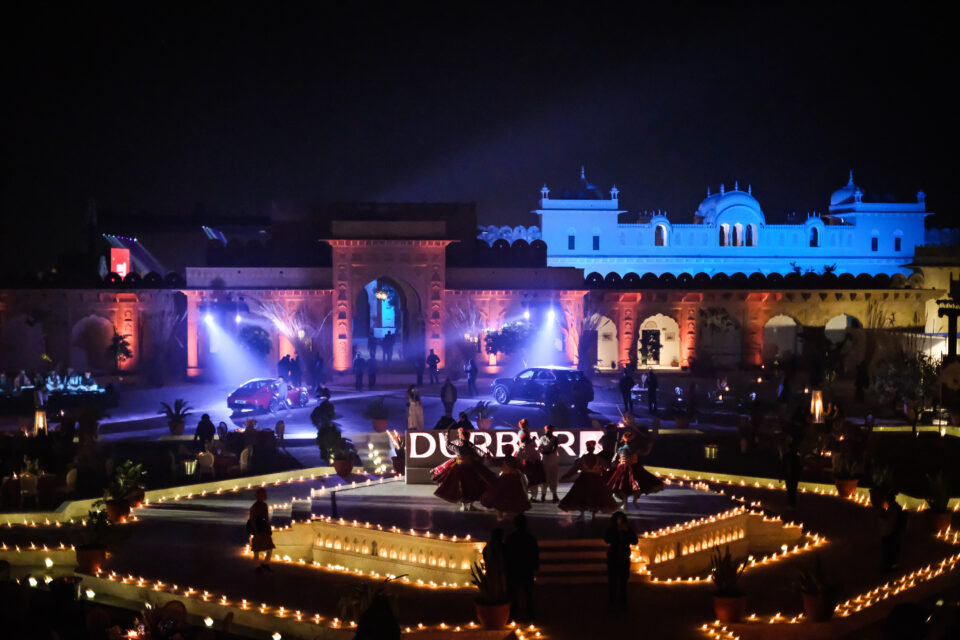
The Char Bagh area of Abheygarh Palace hosting Durbar by Godawan Estuary Water. Photo: Courtesy of the festival
The second edition of Durbar by Godawan Estuary Water unfolded on Jan. 9 and 10, 2026, within the walls of a palace 12 years in the making—100 rooms, three pools, and the vision of Abhimanyu Alsisar’s father, Thakur Gaj Singh, brought to life.
Khetri’s Abheygarh Palace hotel hosted Durbar Festival to test the waters in a way for the luxury heritage venue’s next big event, Magnetic Fields Nomads festival, which takes place on Feb. 13 to 15, 2026. Durbar Festival, for its part, however, leads with a focus on wildlife conservation, craft, music and a kind of intimate, relaxed atmosphere where Godawan’s single malt whisky flows to keep everyone warm amid the winter desert.
The festival’s association with Godawan—a single malt whisky produced in Rajasthan and named after the endangered Great Indian bustard—serves as more than mere sponsorship. Like the company’s commitment to Rajasthan as the home of its feted liquor brand, the festival is an extension of their love for the desert state, from fabrics to music to wildlife and culture. This thematic thread runs through every element of Durbar, from the Puqaar Music Diary documentary screening to the wildlife conservation talks, creating a cohesive narrative about preservation and advocacy.
As we heard during a chat with the Godawan team, the cap on the number of people to a few hundred was to create an “appreciation forward” setting rather than just bringing in influencers. With plans to expand beyond Rajasthan—mini editions in Mumbai and Delhi, another coming to Dubai—and partnerships like their tie-up with Odisha-origin slow fashion brand Boito, the festival demonstrates how supporting artisans can extend across regions without diluting its core mission.
But intimacy comes with growing pains. Where the debut edition was set within the familiar walls of the Nahargarh Ranthambhore hotel, Abheygarh was just about getting tidied and readied for Durbar Festival when we arrived. Patchy Wi-Fi is fine (considering there’s an emphasis to slow down at the festival), but curtains were installed after guests checked in. Abhimanyu Alsisar addressed these “small wrinkles” in a note, so grace marks for that.
The excitement of attending a newish festival, being the first guests at a new luxury hotel and watching well-curated music scores over these wrinkles. There are no wristbands, so everyone booked into the rooms for these dates is here for the two-day festival, making them the first to experience this new venue while simultaneously easing into its unfinished edges.
The demographic is unmistakable: these are luxurious experiences for those who can afford them, though the festival stresses conservation alongside consumption. By day two, a sunny warmth kicks in. Everyone’s greeting each other and mingling, which is perhaps the entire point of an intimate gathering like this. Still, things start late—the eternal chicken-and-egg dilemma of waiting for everyone versus starting and expecting stragglers. When you’ve invited people to slow down, a loose adherence to schedules is inevitable.
Abhimanyu Alsisar, dressed in a cream robe with golden embroidery and a massive Godawan emblazoned on the back, plays host with appropriate flair. His ambitions extend beyond the festival itself: plans for a studio to record folk artists and facilitate crossovers between contemporary and traditional music being presented at Durbar indicate they’re looking beyond just an annual festival.
Day One: Folk Foundations and Fusion Fever
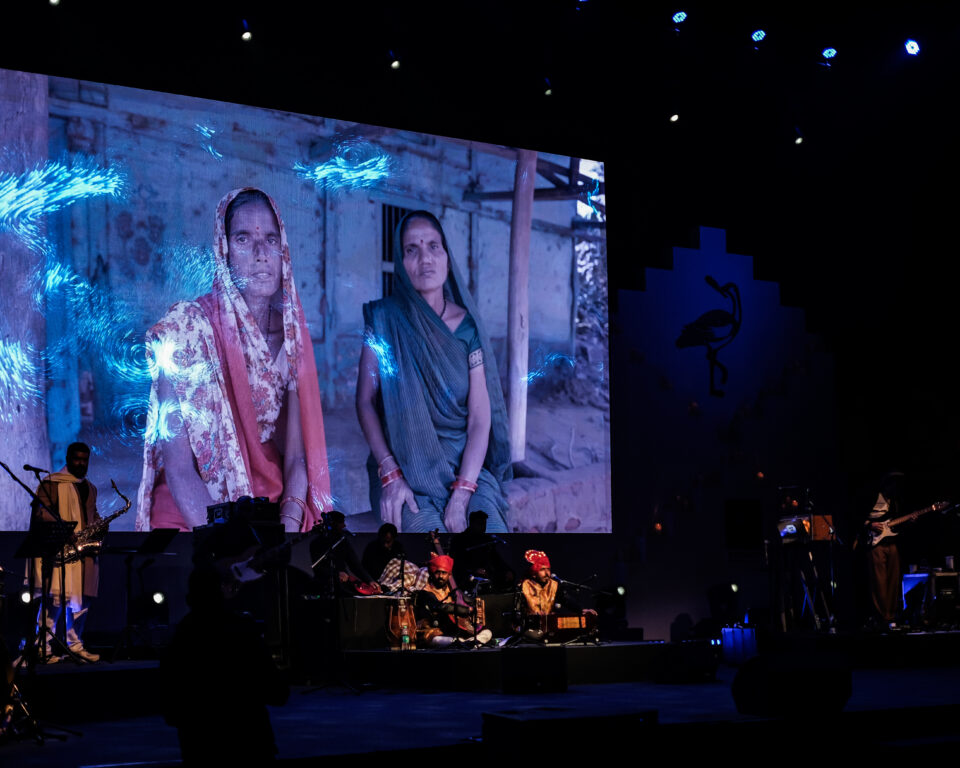
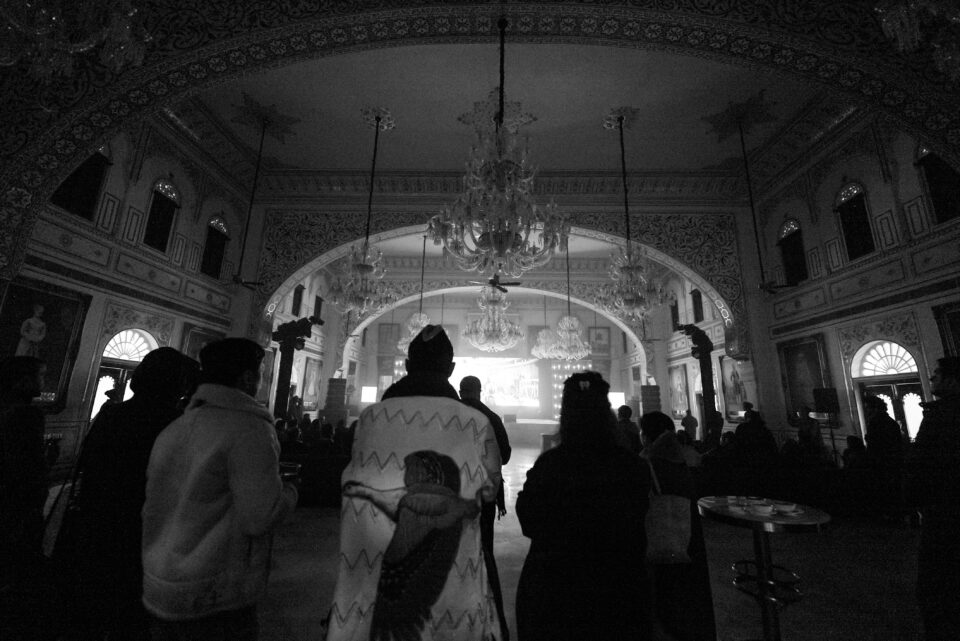
Inside the spectacularly decked Sabha Bhawan, Puqaar Music Diary Part 2, a documentary directed and produced by Alsisar highlighted the challenges facing Rajasthani and Kutch musicians and how these artists remain inseparable from their music despite hardship.
In the backdrop of several chandeliers, candles and royal family portraits and religious paintings, Surat band The Tapi Project embodied the festival’s wandering soul with spacey, psychedelic journeys that feel perfectly suited to the setting. Songs like “Mehsoos” allowed vocalist Swati Minaxi to loosen up the crowd, while the natural reverb in the hall transformed even casual sing-alongs during “Haiya Ho” into something delightful.

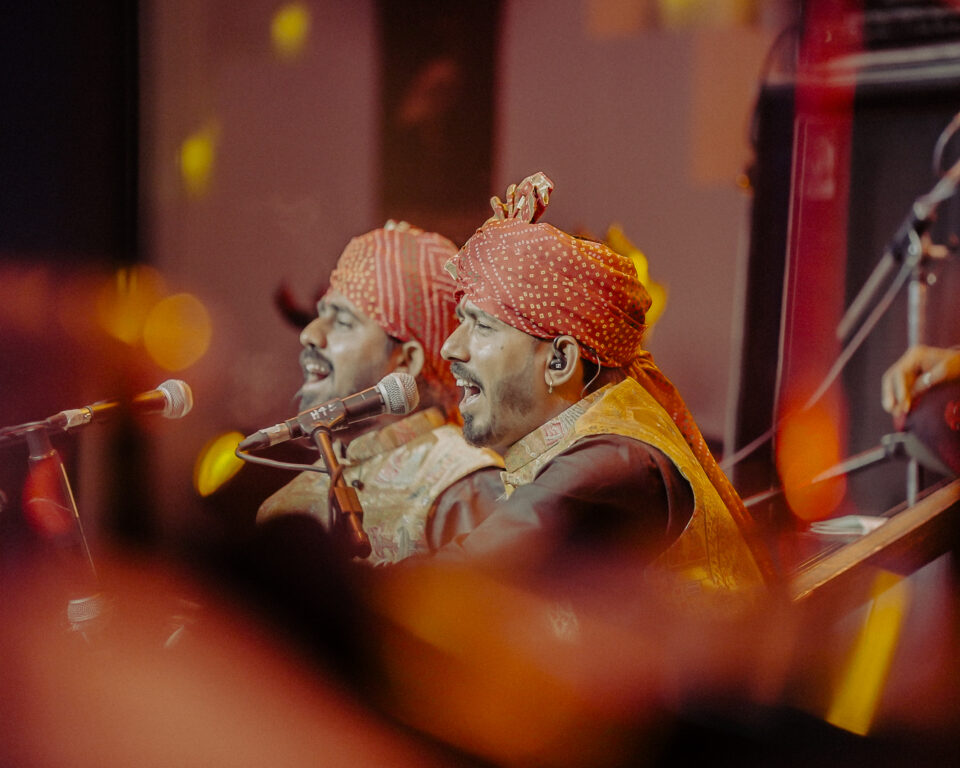
Following a dinner on the lawns at Char Bagh, we headed to the mainstage that’s closer to Abheygarh gates, with Nimad launching into a rich folk exploration of Madhya Pradesh at Tripolia Chowk. Drummer Bharat Chandore and guitarist Jayesh Malani were bolstered by a horn section and traditional artists, including the vocalist brothers Lal Krishna and Balkrishna Dhangar. Visuals – directed by Keerthi Raju and screened on the LED backdrop – added a powerful dimension to their fusion.
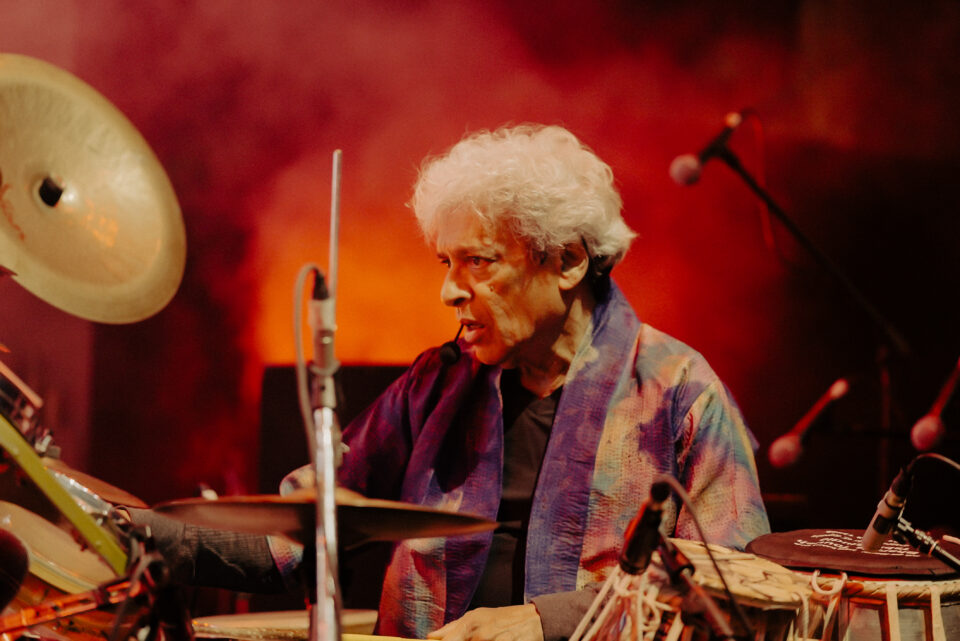
For the second part of their set, they invited legendary percussionist Trilok Gurtu, and everyone rushed forward to the stage. His percussion sits wet in the winter cold, so there’s a bit of scrambling to get it cleaned up before he can warm up with a solo. In a show of improvisation and collaboration songs like “Jhule Lal” turns slightly cacophonous, though everyone gets their moment. There’s a drum-off featuring Gurtu, Chandore, and dhol veteran Dashrath Dada gets the crowd grooving with feverish intensity. Kabir poetry follows, with Gurtu delivering a second drum solo, which was as experimental as it gets. The night closed with a jazzy spin on a wedding song, with Gurtu manning the cajon. While a few wandered off to the Morio Bar to catch a DJ set by Bengaluru-based Unnayanaa, it was more of an after-party option for those who prefer something completely different. With the setting of the hills and a swimming pool, Unnayanaa played a sublime electronic set reading the crowd well.
Day Two: Poetry and Preservation
A slow morning meant it was closer to noon by the time a talk on wildlife conservation began at Sabha Bhawan, but it retained attendees’ interest, covering local species from big cats to big dogs, their behavior, buffer zones, and the coexistence of humans and animals. A documentary short film on another recently departed conservationist, Radheshyam Bishnoi, highlighted his efforts with the Godawan.
The somberness continued with a meditative evening performance by The Nuqta Project’s ambient, chill yet evocative textures, vocalist Anuja Zokarkar leading through Mirza Ghalib’s poetry. Guitar, electronic loops, percussion, and sarangi merge seamlessly across songs like “Nuqta-cheen Hai Gham-e-Dil,” the lounge-inspired “Husn-e-Be-Parvā,” and “Khamoshiyon Mein.”
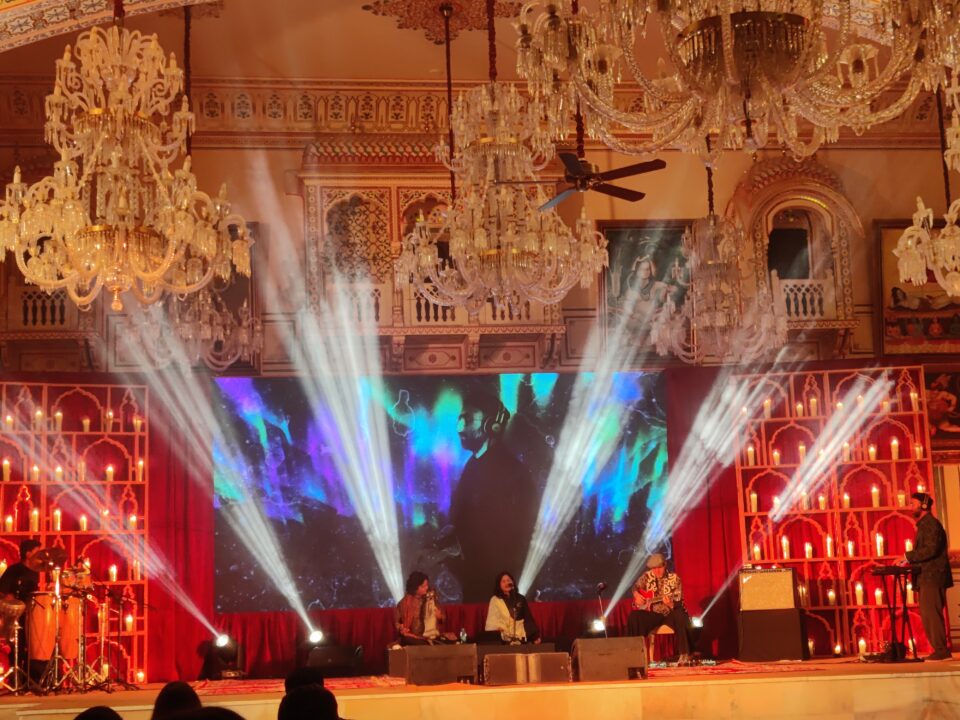
After an abundantly stocked dinner, India-based Israeli artist Shye Ben Tzur and the Rajasthan Express marked the 10th anniversary of their album Junun with a powerhouse performance. Guitarist Jonny Greenwood was, of course, not expected, considering he’s touring with Radiohead, but the performance remained richly hypnotic. Songs like “Hu” arrive with huge horn-driven fanfare, while “Chala Vahi Des” drew knowing smiles between musicians clearly enjoying themselves. Ben Tzur paused to appreciate performing these songs in Rajasthan and remembered band members who have passed away.
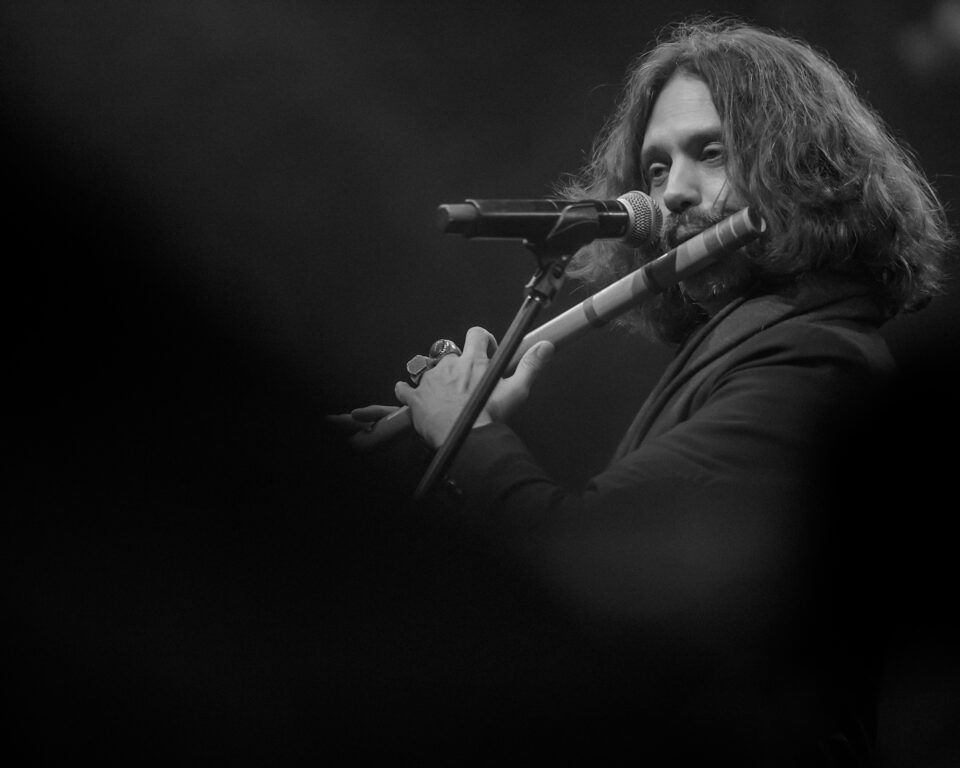
The sense of unity among the band peaks when songs featuring the bhapang resonate well into courtyard, with Ben Tzur beckoning the crowd closer to the stage. From khartal to nagara by Nathu Lal Solanki to dholak, it begins to feel like there wasn’t a better setting than Durbar for this act. Ben Tzur later picked up the flute for a jam, with the night later dissolving into an almost electronic atmosphere with different tracks.
Durbar Festival occupies an interesting space with its second edition. Putting aside the rough edges that prevented it from being a fully seamless experience, it knows its audience and that can be the most important thing in the early years for a festival. The conservation messaging is genuine and not performative.
The festival will no doubt face challenges while retaining its intimacy while scaling or trying different approaches to programming, but it can certainly become a great setting for influential folk-focused curation in the coming years.


