Hwasa Reflects on Her New Single ‘Good Goodbye’
‘Good Goodbye’ is a warm, honest, and beautifully bittersweet farewell coming alive in Hwasa’s voice.

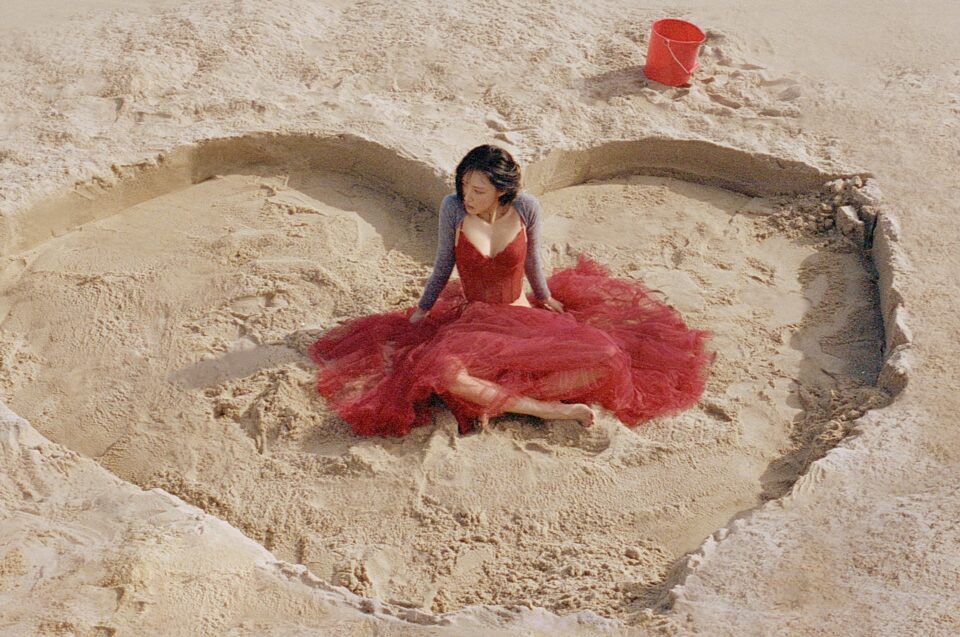
Hwasa in a still from the music video for "Good Goodbye." Photo: courtesy of P Nation.
Hwasa’s newest release, “Good Goodbye,” goes off the beaten path, deviating from her usual electrifying sound we’ve come to love about her. From the fierceness of “Twit” and the sexiness of “Maria” to the empowering “I Love My Body,” her signature husky, powerful, and emotive vocals have made Hwasa stand out in both Mamamoo and as a solo powerhouse. Now, with “Good Goodbye,” she swaps it out for a tender, rhythmic confession style, highlighting the range of her talent.
Co-written by Hwasa and An Shinae, “Good Goodbye” is a breakup song wrapped in a friendly farewell. It candidly reflects on the relationship while expressing hope for the other person’s happiness. Hwasa says, “When parting ways with someone you loved, I think it can be hard to put an end to it with just words. I kept asking myself, how would I be able to express that feeling? After reflecting, I realized that the best way is to wish that person a good goodbye.” Those words become the song’s lyrical core, highlighted in the chorus lines, “Goodbye will hurt us, but we’ll keep it beautiful/Smile even brighter…”
The music video is like a cinematic memory reel. It begins with Hwasa and actor Park Jeong‑min enjoying a day by the sea, the waves rolling like time itself, before the scene segues to a car loaded with luggage — a stark visual of departure. Park, in a sleek black suit, and Hwasa, in a white gown, is an ironic nod to a wedding, as they clutch vintage suitcases. The juxtaposition of matrimonial imagery with the act of leaving underscores the tension between hope and farewell.
Scenes flicker between the past and present. Park captures their fun beach moments on a camcorder, while the same beach now shows Hwasa alone, the color palette shifting from warm to muted tones. Cozy moments are intercut with moments of tension, characterized by heated exchanges and Hwasa in a pensive mood, her hands and knees revealing bruises that mirror her emotional wounds. Eventually, she leaves with a suitcase, locking the door to the room where they spent time together. The “US” carved on the lock is a reminder of what once was and symbolic of locking away those memories that linger through the frame, intensifying the breakup narrative.

Hwasa speaks about the visual process: “For this song, I tried my best to approach it naturally, just as I always do. Towards the end of the shoot, there was a scene where Park Jeong‑min and I danced the blues together, and in that moment, my heart genuinely trembled. He carried such quiet charisma; he’s a truly remarkable person.” That dance, under dim lights in the quiet of the night, becomes like an emotional turning point, bridging the happy past with the melancholic now.
The sea is a recurring presence, showing how time flies. On the beach, there’s a facade of a miniature house with only its door and window frames open to the waves, evoking memories of a home once built on love, while the facade highlights the heartbreak that remains. The story wraps up with Hwasa alone in the car, poignantly contrasting her past ride with Park. And as she stares into the void, he stands in darkness, alone, lost in nostalgia.
Hwasa’s calm and relaxed vibe in the video reveals a more thoughtful side, with her words adding depth to the song’s underlying message and honesty. “Goodbyes are never easy, and we experience so many of them throughout our lives. Each one leaves a mark, but through this idea of a ‘good goodbye,’ I hope listeners can find comfort and be reminded of how beautifully we live, even in these moments of farewell.”