

Jazz Corner: How 20th-Century Jazz Shaped Popular Music
From ragtime and the Jazz Age to Bollywood and hip-hop, jazz has been a constant force in influencing music across cultures and generations.


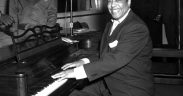
American jazz pianist composer and bandleader Duke Ellington with from left Ray Nance, Rex Steward, Tricky Sam Nanton, Harry Carney, Johnny Hodges and Sonny Greer ca 1944. (Photo by JP Jazz Archive/Getty Images)
Music is said to be a reflection of the times it was written in. Social changes dramatically altered the course of music in the last century. In Western music, certainly, the age of European classical music—or art music as it is popularly known—was not as dramatic as before. Perhaps the tempo of life was changing as well. Still, classical music remained the gold standard, at least in the West. Nothing could replace classical music.
In 1865, Abraham Lincoln put an end to slavery in America. Within a few years, the community of African slaves integrated into the mainstream American society—not quite as equals yet, but certainly a step out of their abhorrent state of slavery. This freed community of African Americans was incredibly musical, expressing themselves in churches, funeral bands, celebrations, and in everyday forms of entertainment. As these sounds got more streamlined and organized, they emerged as the early stages of jazz. It’s this movement that has shaped most of the music in the last century, and continues to do so today. Let’s try to connect the dots.
As early as 1900, Ragtime, vaudeville, Tin Pan Alley, music hall songs—all essential components of what would emerge as jazz—were shaping the mass entertainment landscape. African American musical concepts were spreading across America. Although classical music was still socially more dominant and seen as more prestigious, the early sounds of jazz were much more appealing to the larger public. This gave rise to a whole new realm of popular music.
By the 1920s, jazz became the music of young Americans and Europeans. The decade was dubbed ‘the Jazz Age,’ inspiring literature (F. Scott Fitzgerald’s The Great Gatsby being a prime example) and shaping a new cultural zeitgeist.
Musically, W.C. Handy and vocalist Bessie Smith with the Blues, and Louis Armstrong laid a strong foundation for later genres with their jazz. These sounds were fresher and more dynamic, dominating the cultural scene by the early 1930s.
The 1930s were the decade of the Great Depression. The colossal Wall Street collapse of 1929 devastated the economy, leading to unemployment, bankruptcies, and social upheaval. In America, the introduction of Prohibition— which also contributed to a rise in crime and the birth of the Mafia—only compounded the misery of the American people. The silver lining, perhaps, was the diversion offered by dance halls as low-cost places to drown one’s sorrows. Jazz blared through these dance halls, played by some of the era’s most eminent big bands. Duke Ellington, Count Basie, Glenn Miller, Woody Herman, and other legendary jazz musicians led these bands, cultivating a sound that came to be known as pop music at the time. In many cases, the music was broadcast live on the radio, turning jazz songs into household favorites. This music spread across Europe and beyond.
It’s interesting to note that African American bands arrived in India by the mid-1930s and were very popular. However, in contrast to the patronage of the poorer sections of the American masses, it was the elite, often the European communities in the then-Bombay and Calcutta, that patronized establishments featuring these jazz bands. Soon, the jazz music culture spread into the local music community, and a large number of fine Indian jazz musicians were heard playing in urban cities. This sound of jazz even entered the film industry—Bollywood quickly embraced it, and several music directors, notably C. Ramchandra and later R.D. Burman, introduced this sound in the Hindi-dominated film music industry. (This digression can be elaborated on in a future Jazz Corner!)
Jazz has become a narrative; a continuous journey of interaction and improvisation. Each generation listens to, absorbs, and reshapes the music rather than following a set text. Charlie Parker in the 1940s may have never played with Louis Armstrong, twenty years his predecessor, but was nevertheless influenced by his rhythmic flow and vitality. Still, Parker’s music remained distinctly original. Similarly, John Coltrane and Miles Davis took the structure of Parker’s music and produced entirely different but unique sounds. These building blocks and bridges are a hallmark of the jazz trend, and continue to connect with contemporary music even today.
While popular vocalists like Nat ‘King’ Cole, Frank Sinatra, and Tony Bennett used the backing of jazz bands, the direct transition from jazz to more contemporary popular music is not so obvious. However, the introduction of electronic instruments has leapfrogged jazz into street music. In his release “Chameleon,” jazz pianist Herbie Hancock played his keyboards for a type of fusion which had the roots of funk and modern R&B, before eventually leading to hip-hop. In the 1990s, Guru’s album “Jazzmatazz” used jazz samples linking jazz and rap.
Another group, US,3, in their very popular album “Hand on the Torch” used jazz riffs and horn solos to back the recited sounds of rap. It worked in connecting many jazz listeners with rap and vice versa. In recent times, Kendrick Lamar in “Alright” from 2015 has used prominent contemporary jazz musicians such as Robert Glasper and Kamasi Washington to great effect.
It’s a good journey so far, keeping pace with the huge changes in society that technology has brought. But it is good to know the roots. As the great and wise Duke Ellington always maintained, “If you want to know where you are going, you must know where you have come from”.