


‘My Dress-Up Darling’ Season 2 Review: An Anime Ode to Cosplay Culture
This season of the rom-com anime amps up the kawaii factor with more cosplay, over-the-top antics, and the slowest slow-burn romance


Typical Halloween outing in Shinjuku, as seen in 'My Dress-Up Darling.' Photo: ©Shinichi Fukuda_SQUARE ENIX, Kisekoi Animation Committee
There are many ways to show your appreciation for art, cinema, literature and media today, whether it’s through fan art, fiction, or fanzines. Some diehard fans take this appreciation a step further, transforming themselves into the characters through cosplay. While anime and manga have long been at the heart of cosplay culture, it’s a refreshing twist to see a manga that turns the spotlight onto cosplay itself. My Dress-Up Darling (Sono Bisuku Dōru wa Koi o Suru) follows Marin Kitagawa and Wakana Gojo’s foray into the world of cosplaying through a slice-of-life slow-burn romance.
Wakana nurses a secret ambition to become a craftsman who makes hina dolls. Meanwhile, his popular classmate Marin, a part-time model and full-time gyaru (a Japanese fashion subculture that goes against conventional beauty standards, often characterized by their bleached hair and colorful personalities), is determined to bring her favorite characters to life through cosplay. Marin’s problem? She lacks the necessary skills to bring her cosplay ideas to life.
But a chance encounter leads her to enlist the help of Wakana, who happens to be a doll-making expert. His skills find a new purpose: creating costumes and doing makeup for a life-size doll—Marin (hence the title).
The two are polar opposites in every sense of the term. Wakana is quiet, timid, and extremely underconfident. Marin, on the other hand, is exuberant, outgoing, and self-assured. Somehow, what at first seems like an unlikely romance turns into a very believable, wholesome comedy of errors. Both of them like each other, but have no idea the feeling is mutual. Wakana spends his time having mini-panic attacks that he has made some sort of social faux pas, whereas Marin’s numerous attempts at flirting go completely over his head. It’s a meet-cute that blossoms into something more. With Wakana able to link his love of doll-making to Marin’s love for cosplaying, they find common ground.
Season 2 picks up where Season 1 left off, with the pair’s ongoing journey. There’s a lot happening: new costumes to make, new characters to cosplay, new conventions to attend. Evidently, the animation has improved from Season 1, where the majority of the budget went into animating only Marin.
There are a lot of in-universe anime, manga and games which Marin consumes voraciously, loosely based on real-life counterparts. It’s nice to see the attention to detail given to distinguishing between these art styles and the main aesthetic of the anime. There’s a fair amount of lore dropped through these fictional media, especially by Marin, whose room is that of a typical fanatic, filled to the brim with countless figures, posters, plushies, and even body pillows. Despite the stigma and negativity attached to the semi-degenerate lifestyle, Marin is unapologetically and unabashedly proud of her interests, in true gyaru fashion.
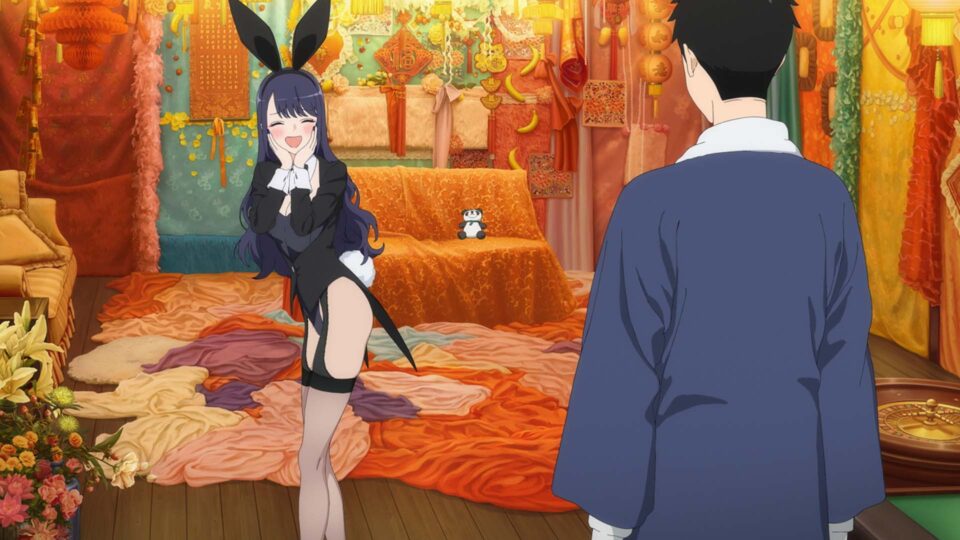
Of course, there’s plenty of inescapable fan service in the show, with Marin’s seemingly questionable taste and Wakana tasked with making those costumes. But not to worry, Wakana himself is just as uncomfortable—if not more—than the average viewer, with the situations that arise thanks to Marin’s shenanigans.
Aside from the budding romance, the majority of the story is dedicated to the intricacies of cosplaying. The anime offers a surprising wealth of information for cosplayers or those just getting into the hobby who don’t know where to start. My Dress-Up Darling provides viewers great tips and tricks for real-world applications of the cosplays you see on screen, from wigs to makeup to the outfits themselves.
There’s a detailed breakdown of each cosplay that Wakana makes. From figuring out what material to use to translating what a 2D anime girl wears onto Marin’s actual figure, Wakana goes through great lengths for sheer accuracy of what he sees on screen, all while remaining within the budget. For Wakana, there’s no easy way out. He’s going to go the whole nine yards, even if he’s making a bunny suit—that silhouette needs to be as screen accurate and flattering as possible.
Marin and Wakana meet plenty of other interesting cosplayers, who all have a vastly different approach. There’s a lot covered in the show, thanks to the variety of cosplayers—from how to tackle physical attributes to cross-playing (dressing up as a character of the opposite sex).
The show paints an accurate picture of the internal workings of cosplay culture in Japan. When shopping in downtown Tokyo and anime hotspots like Ikebukuro, combing through wigs, fabric, and peripherals is no joke. And matching the image to the perfect shade of hair fibre is harder than it sounds.

Aside from the basics of cosplaying, the show also tackles cosplay photography, which is usually done in photo studios dedicated to cosplayers. Most of these studios—like the one Marin and Wakana rent out—are often located above stores that sell cosplay goods (like Hacos Stadium above Acos in Ikebukuro) and are often available to rent for very reasonable prices. They feature multiple backdrops and props that suit most, if not all, cosplays. As much as looking like the character is important, where the character is standing is something to keep in mind. If Marin’s cosplay is of a character that is in a casino, she wants a casino backdrop, not a bathroom mirror and a ring light. Another thing that’s done well is Wakana’s use of a mobile camera to do all the cosplay photography. You don’t need a DSLR, just a really good eye for composition.
Unlike other parts of the globe, Japan is strict about cosplay etiquette. One can’t freely cosplay in public spaces without permission, so cosplayers only get two occasions: a convention or a photo studio. This also means one cannot commute in full costume on public transportation. The sight of Marin and Wakana lugging a giant suitcase with the wig, costume, and makeup around is a familiar one, common especially if you’ve disembarked at stations like Akihabara or Ikebukuro.
One of the conventions featured in the anime is Acosta, a popular monthly cosplay convention held in Sunshine City, Ikebukuro. Unlike a traditional comic convention, there isn’t much to see or do here. It’s just an opportunity to be out and about as your favorite character in public. The anime captures the spirit of Acosta well. Marin and Wakana exploring the aquarium above and roaming the halls of the mall is pretty much exactly what the itinerary of any cosplayer there looks like. It’s immersive and nostalgic at the same time. One can almost feel the cold air blowing through the large, wide white hall, which is the designated common changing area where cosplayers gather to get ready.
Cosplay culture today isn’t what it was 10 years ago. In the age of social media, most new cosplayers only seem to care about the numbers and look at it more as a career than a passion. Trend-chasing means that they cosplay characters not because they like them, but because they’re popular—something that becomes evident when you attend a convention. It has turned into a cutthroat popularity contest. Ironically, Marin herself turns into what she isn’t—just a cute girl cosplay done for the sole purpose of growing on social media.
The real Marin, however, is a refreshing breath of fresh air. She doesn’t mind if her favorite character isn’t the most popular. She just wants to cosplay as her. She serves as a reminder that, at the end of the day, cosplay should be something you want to do for yourself. Something you want to do because you love to do it. It’s about falling in love with the character and feeling such passion that you want to embody them. It’s something so simple yet so easily overlooked in the real world. And that is My Dress-Up Darling’s biggest takeaway.
My Dress-Up Darling Season 2 is now streaming on Crunchyroll.

