People We Lost in 2022: KK
We lost a musical genius the day that KK passed away. But even though we still miss him, his voice and musical legacy will live on and resonate with us for years to come

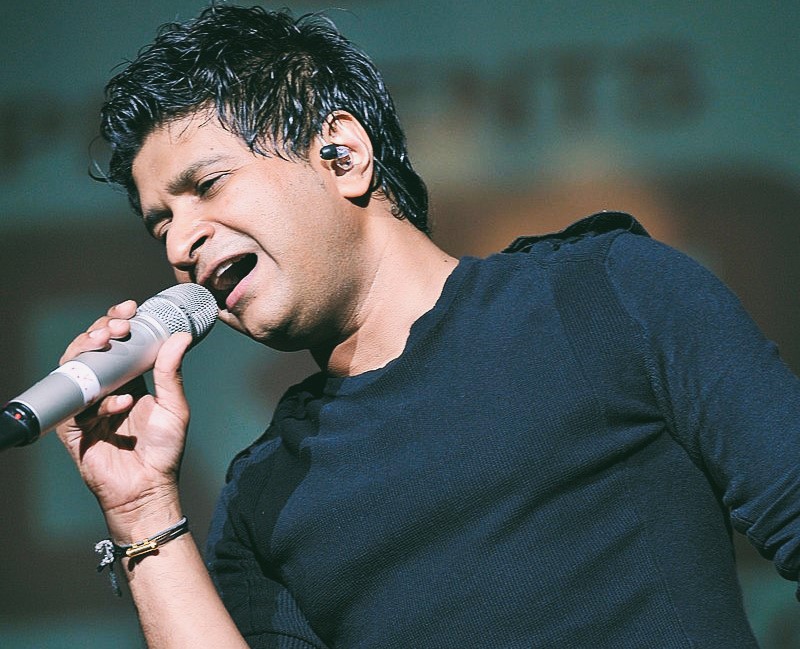
File Photo of KK: Courtesy of Wikipedia
On May 31st, 2022, India bemoaned the sudden demise of Krishnakumar Kunnath, the famed singer better known as KK. That day, following his concert at Nazrul Mancha in south Kolkata, the artist collapsed in his hotel room. Upon being rushed to the Calcutta Medical Research Institute, the doctors pronounced him dead. He was 53.
KK has recorded songs in several Indian languages as one of India’s finest, most gifted vocalists. He rose to prominence in the late 1990s thanks to his moving melodies and has contributed vocals to some of Bollywood’s most iconic soundtracks, primarily romantic hits.
The singer’s ascent in the music industry is among the best examples of a star emerging from adversity and pure talent (he had no formal training in music). Born in Kerala to Malayali parents, C.S. Nair and Kanakavalli, he was raised and educated in Delhi. After completing a commerce degree from Kirori Mal College (Delhi University), where he was the frontman and drummer of the band Horizon plus a member of the college music society MUSOC, KK spent months working as a marketer, later singing at hotels to stay afloat, before moving to Mumbai.
In an interview with India Forums, KK mentioned that he started with jingles. He then felt that Mumbai was the right choice to launch a career. As a result, he shifted to the city in 1994. “I had submitted the tracks to Louiz Banks, Ranjit Barot, Shiv Mathur and Leslie Lewis, and given my contact number. Those days, there were no mobiles. I would call my aunt every now and then just to find out if any music director had called. I got into film playback with ‘Chhod Aaye Hum’ which I sang for Maachis.” Subsequently, KK scored A.R. Rahman’s “Kalluri Saaley” and “Hello Dr.” from the Tamil action-romance film Kadhal Desam (1996), and “Strawberry Kannae” from the Tamil musical-drama film Minsara Kanavu (1997).
The nation realized that Bollywood music had gained a gem when he burst onto the scene in 1999 with the song “Tadap Tadap Ke Is Dil Se” from Hum Dil De Chuke Sanam. With additional all-time hits like “Dola Re Dola” in Devdas (2002), “Tu Aashiqui Hai” in Jhankar Beats (2003), “Awarapan Banjarapan” in Jism (2003), “Dus Bahane” in Dus (2005), “Kya Mujhe Pyaar Hai” in Woh Lamhe (2006), “Aankhon Mein Teri” in Om Shanti Om (2007), “Labon Ko” in Bhool Bhulaiyaa (2007) and “Khuda Jane” in Bachna Ae Haseeno (2008), to name a few, KK became a distinctive voice for Hindi movies. He received six Filmfare Award nominations and took home the 2009 Screen Award for Best Playback Singer for “Khuda Jaane.”
Throughout a career of over two decades, KK was a reliable hitmaker in a continuously evolving music market. Thousands of jingles and songs in a range of regional languages – including Hindi, Tamil, Telugu, Kannada, Malayalam, Marathi, Odia, Bengali, Assamese and Gujarati – came his way thanks to his potent vocals. He experienced a prolonged period of hit songs in the 2000s. It appeared as though he could easily access the depths of emotions, making music that was magical to listen to. In addition to A.R. Rahman, Ismail Darbar, Shankar-Ehsaan-Loy, Pritam, Vishal-Shekhar, Anu Malik, Harris Jayaraj, Yuvan Shankar Raja and Gurukiran among others, he has worked with the crème de la crème of the Indian music fraternity.
Pal, KK’s first solo album, swept the country, with Leslie Lewis composing the music. Its songs “Aap Ki Dua,” “Yaaron,” and the title track hit the right spot with listeners and did exceptionally well on the music charts. KK received the 1999 Screen Award for Best Male Singer (non-film music) for the album. His sophomore album, Humsafar, was released in 2008. That apart, he has also appeared on many popular shows such as Coke Studio and MTV Unplugged and sung songs for hit television shows like Just Mohabbat, Shaka Laka Boom Boom, Kuch Jhuki Si Palkein, Hip Hip Hurray and Just Dance. Needless to say, throughout his active years, KK was a household name in the Indian entertainment industry. That being said, insiders claim that the artist was very grounded and firmly believed in prioritizing performance over everything else.
The day he passed away we lost a musical genius. It took me a long time to come to terms with the fact that he was no longer alive, especially considering that I live in Kolkata, where he died. I remember a concert-goer telling me, “Never in my wildest dreams did I anticipate that the lines from ‘Pal’ would come to pass” – “Hum rahein ya na rahein kal/ Kal yaad aayenge yeh pal (whether I live or not tomorrow, these memories will remain).” The tragic loss of KK serves as a reminder that true artists are cultural cornerstones; they are irreplaceable.
In the presence of West Bengal Chief Minister Mamata Banerjee, the West Bengal government honored KK with a gun salute at Rabindra Sadan, Kolkata. The entire film and music industry was in mourning, with industry figures and politicians offering condolences, including Prime Minister Narendra Modi. KK’s remains were brought to Mumbai, and his funeral was held at the Versova Hindu Cemetery the following day (June 2).
In my mind, KK exemplified the term “famous” in every way while still maintaining real humility. He always exuded that certain aura of brilliance and ingenuity in his songs, concerts, and even in the way he performed. And even though we still miss him, his voice and musical legacy will live on and resonate with us for years to come.