From EDM to Folk House, Sartek Has Started His Own Movement
The New Delhi producer turned away from expected EDM to champion a sound that’s traveled to stages like ADE in Amsterdam

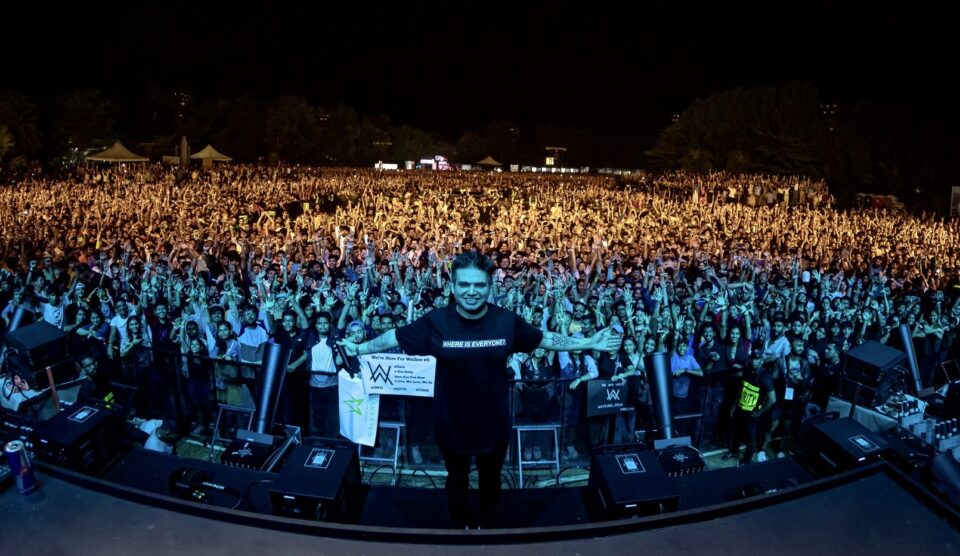
DJ-producer Sartek. Photo: Courtesy of the artist
When New Delhi-based DJ-producer Sartek played a sold-out Desi Elite Night at Amsterdam Dance Event in October 2025, he was finally on the other side of the stage after having attended the mainstay electronic music showcase since 2016.
Rewind a decade back and Sartek was making progressive house and releasing on labels like Black Hole Recordings (“Apocalypse”), Revealed (“Don’t Stop”), and Spinnin’ and says he often wondered how an Asian artist could get on stages like ADE. “And suddenly I see this desi genre of folk house picking up, and a promoter wanting to do an ADE show and booking a folk house artist which has Indian vocals — it was something very interesting for me.”
The ADE Desi Elite Night show at Jimmy Woo drew crew members and managers from Norway, Poland, and Belgium who have previously “had an Indian influence,” according to Sartek. “It’s just that Indian vocals are very layered, anybody can dance. You don’t understand the meaning of it,” he says cheerily yet matter-of-factly about the draw of any kind of desi sound on a global stage like ADE.
Just before ADE, Sartek toured Germany, playing Berlin, Munich, Cologne, and Düsseldorf. “Berlin was a mecca of techno and dance music, and suddenly this kind of sound is picking up,” he says. “It actually made me feel more motivated to work harder to make this sound even more global.” So far, Sartek’s ability to balance commercial, mainstream gigs with a more inventive folk house sound has also taken him to work with Aryan Khan’s luxury label D’yavol and perform at the Red Sea Film Music Festival in Jeddah, sharing the billing alongside the likes of A.R. Rahman.
For those who have followed Sartek through his reinventions, there was also a time when he was leaning into the idea of becoming a content creator, drawing on meme humor to maximize audience engagement. Sartek acknowledges that those kind of decisions reflect the reality facing modern musicians. “Content creator has become one big blanket,” he says. “You become a content creator first, and then you become a musician. It’s very hard for a musician to sit down and realize they’ll have to make some content around the music for people to listen to it.”
He’s pragmatic about it, however. “One or two viral videos you can get, one or two stupid memes you can make, but after that, what then? How would you convert that into shows?” The answer, he believes, is being both: “It’s a good combination of being a content creator and also a musician.”
With singles like “Sufi Tech,” “Eena Meena,” and “Ku Ku Ku” dotted across 2025, it was the culmination of a few years of studio tinkering, starting around the pandemic lockdown years around 2022. He understood that he couldn’t “completely switch from one genre and go completely different.” He adds, “So I had to make a crossover, like a unique innovation.”
The solution was to combine the nostalgia value-heavy Indian vocal samples with house beats. “If a 70-year-old uncle is sitting in a bar and listening to a ‘Mehbooba’ from his day and time, and suddenly it switches to a nice house beat, it caters to both audiences. It’s nostalgia redefined in modern sound.” The Indo house movement has also been on the rise, thanks to diaspora collectives like Indo Warehouse and Stick No Bills as well as artists closer home. “There’s a big thing happening across the globe where Indians want to listen to their kind of music, but in a very different sound,” Sartek says.
Now, there’s something for everyone with the way folk house and Indo house is presented. “The desis get their vocal bits, with Punjabi and little Indian influence. And the foreigners get their beats, their techno, their melodies. It’s a perfect combination, like butter chicken and sushi,” Sartek says with a laugh.
He points to songs like “Ghafoor” from Ba***ds of Bollywood by composer Shashwat Sachdev, as well as cuts by Punjabi artists like AP Dhillon and Karan Aujla that have infused house beats. “Typical Punjabi music is gone now. It’s just become more clubby. So I want to do this with traditional Indian folk heritage sounds.”
Different regions offer different sonic possibilities for the sound. “Punjabi vocal is different. Telugu vocal is different. Northeast has a different sound, Gujarati has a different sound. Why not just play around these kind of vocals and probably try and make a culture around this?”
In 2024, Sunburn Festival brought in Sartek to curate his own Folk House stage, signalling another sure sign for the artist to keep pushing the movement. The stage returned in December 2025 in Mumbai, bigger than before. “Sunburn festival giving me this chance to curate artists myself is a big deal,” he says.
For the 2025 edition, Sartek got a full day slot on day one to showcase artists working in the same space. He’s intentionally programming artists who “are not getting that kind of exposure on their social media right now, who I feel will be the next big thing and more importantly, believe in this kind of music.” That included flautist, sitarist and producer Akhlad Ahmed, Delhi’s Ansick, who reworks yesteryear Bollywood songs’ vocals; and Bengaluru duo Shor Bazaar, who blend Indian samples with dancehall, reggaeton, and Afro-house.
“If this goes good, then we might do a folk house showcase often — once every few months,” Sartek adds proudly.
For the next three to four months, Sartek is building on the success of songs like “Sufi Tech,” which samples the legendary qawwali powerhouse Nusrat Fateh Ali Khan’s vocals on the track “Tumhen Dil Lagi Bhool Jani Paregee.” The DJ-producer is diving headlong into more qawwali vocals and adapting it for techno or Afro house. “It’s a little tough because of the sound quality, where they’ve sung the songs, the timestamps, how to rearrange them,” he admits. “But it’s going to be interesting. Everybody’s trying to work on vocals, which are very simple, very easy to work with. Nobody’s trying to do this.”
Beyond that, he’s planning a “Sounds of India” album, featuring singers from different states performing in their regional languages like Kashmiri, Punjabi, Telugu, Malayalam, Assamese and Gujarati over electronic production. “Each song will have a different video with their ethnic singers in it, like a full folk vibe, with costumes, in a way that it looks like one full folktronic album.”