A bombshell federal report paints a grim picture of life in the world’s no-longer-so-icy nether-regions
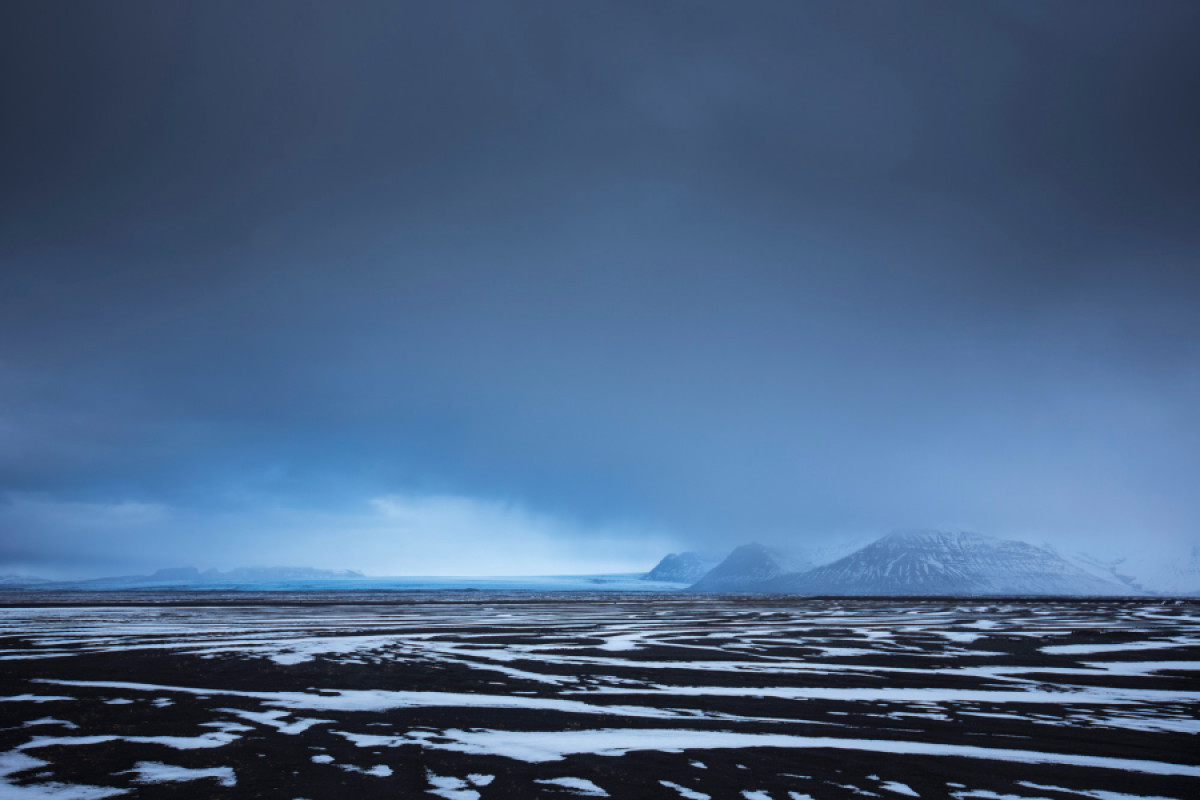
Melting snow on glacial alluvial plain by Skeidararjokull glacier in Vatnajokull National Park, South Iceland. Photo: Tim Graham/Getty Images
The National Oceanic and Atmospheric Administration released its 2019 Arctic Report Card on Tuesday, and folks, the results aren’t great.
The report details a rapidly changing Arctic environment featuring melting ice, a greener landscape, and, alarmingly, pollution emissions on par with some large nations. The Arctic could be releasing upwards of 600 million tons of net carbon per year, the report finds, potentially putting the region alongside Mexico, Canada, and South Korea as one of the world’s largest contributors to atmospheric CO2. Though the carbon emitted from such industrialized nations is the result of burning fossil fuels, the hundreds of millions of metric tons pumping out of the Arctic is the result of thawing permafrost.
Permafrost being permafrost, it takes more than the seasons changing for it to actually melt it. The increasingly rapid thawing of frozen Arctic earth is the result of climate change, and the NOAA’s report card reveals that temperatures are continuing to rise in the world’s nether-regions, which aren’t as icy as they used to be. In August, for instance, the average sea surface temperatures in several highlighted Arctic bodies of water were 1-7 degrees Celsius warmer than the average from 1982-2010. Just as frightening: the average land surface temperature north of 60 degrees N was the second-warmest since 1900.
It’s not just permafrost that rising temperatures are affecting. The report also found:
These changes are threatening indigenous Arctic communities and Arctic wildlife directly, as well as the rest of the world, on a profound scale. The deteriorating Greenland Ice Sheet is causing the global sea level to rise 0.7 millimeters per year, and Arctic carbon emissions are helping cook the planet at a rate that will soon be irreversible unless dramatic steps are taken.
The need for urgent action was stressed Wednesday by teenage climate activist Greta Thunberg, who spoke to delegates at a United Nations climate summit in Madrid. “Our leaders are not behaving as though we were in an emergency,” said Thunberg, who the same day was named Time magazine’s Person of Year. “If there’s a child standing in the middle of the road and cars are coming at full speed, you don’t look away because it is too uncomfortable. You immediately run out and rescue that child. And without that sense of urgency, how can we, the people, understand that we are facing a real crisis.”
Some governing bodies are at least trying. The European Commission on Wednesday revealed plans for a European Green Deal that would reimagine the continent’s economy in accordance with the climate crisis.
Meanwhile, the president of the world’s second-largest carbon emitter is dismantling efforts to fight the problem and struggling to even feign concern. “Climate change is very important to me,” President Trump managed last week in London despite his penchant for slashing environmental regulations. “I’ve done many environmental impact statements over my life and I believe very strongly in very, very crystal clear, clean water and clean air. That’s a big part of climate change.”
The hip-hop/pop artist’s follow-up to ‘Monopoly Moves’ will release on Feb. 20, 2026
The U.K. singer-songwriter and pop artist on how he quietened his imposter syndrome to deliver…
From becoming a billionaire to starting a family, the superstar has kept incredibly busy since…
The project will arrive on March 20 via Gamma, the independent music company Ye inked…
“We don’t think that the future of music involves the labels anymore,” Napster CEO John…
The artist is nominated for four awards at this year’s ceremony including Album of the…

