Ahead of his concert in Mumbai, the jazz pianist talks about how the younger generation really excites him and a performance where an opera singer sang with her head underwater in an aquarium
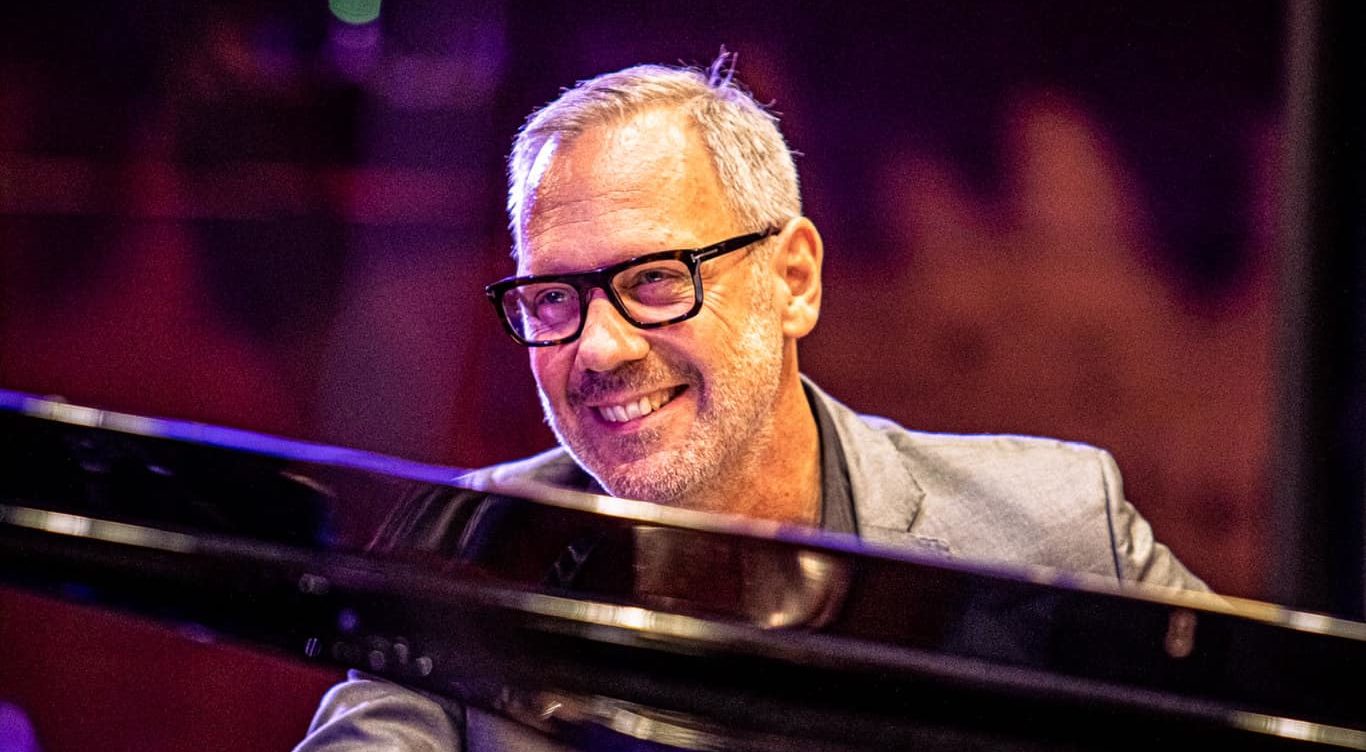
German jazz pianist Thilo Wolf.
German jazz pianist Thilo Wolf will be playing at the NCPA Jazz Festival in Mumbai on November 27th. He has a body of music that speaks of a sophisticated approach to arranging and presenting jazz.
The band will include Johanna Iser, the only vocalist at the festival.
We reached out to Wolf with a few questions to help audiences in Mumbai acquaint themselves with his music and musicians. Excerpts from the interview.
Tell us something about your band and especially about Johanna Iser, who will be the only singer at the NCPA Jazz Festival this year.
The Thilo Wolf Jazz Quartet has its origins in the Thilo Wolf Bigband; it basically consists of the rhythm section of the orchestra. I have been playing together with Norbert Nagel, Christian Diener and Paul Höchstädter for a very long time and that is of course a prerequisite when you are on stage together.
I met Johanna Iser by chance about seven years ago and immediately realized what incredible talent and musicality she has. She is certainly one of the best and also most flexible singers I know. And of course, it is a wonderful opportunity for a composer and arranger to try out new ideas, because Johanna can realize them. In addition, she is highly professional and comes to the job very well-prepared.
After listening to your music, I really liked your work with the saxophone sections. The arrangements are complex and well put together. How did you become interested in this large group format?
Thank you very much for the compliment. The big band formation has grabbed me since I was a child, its force and power, but on the other hand also the wide range of dynamics and sound colors. With Norbert, my lead alto player, whom I have actually known for 30 years, I not only have a close friendship, but with him, I also have one of the best leaders one could wish for the saxophone part in a big band. Norbert has had a decisive influence on the sound of the movement as well as the whole big band through the way he plays. He has a very strong personality, which of course rubs off on the whole movement. And when you have that kind of quality in the band, you also use it as an arranger.
Do you find that jazz musicians from Europe or from countries other than the U.S., the home of jazz, have to work harder to prove themselves because they don’t come “from the culture”?
A good question. I think that musicians in Europe today play on par with Americans. Here in Germany, the education at the universities has become so excellent through the establishment of jazz departments that you have a tremendous portfolio of really good and young musicians. 30 years ago, when I founded my big band, it was completely different. Among the musicians today, cultures no longer play a role; I find it rather exciting how much the language of music connects cultures internationally.
Many European jazz artists were influenced and even mentored by American musicians who lived in Europe – like Dexter Gordon, Ben Webster, Kenny Clarke, Bud Powell and others. Did their presence in Europe have any influence on your playing?
Of course, the Americans influenced us a lot in our playing. I also had great role models in musicians like Oscar Peterson or Count Basie, two pianists who couldn’t be more different.
In the meantime, however, European musicians have also become role models. Please don’t take it as arrogant when I bring this example, but a few years ago I discovered by chance that my own music has an incredible number of followers in Japan. Young big bands and pianists play my compositions and copy my solos. I find that tremendously exciting and it makes me very happy when you can pass on your creativity to young people in this way and inspire them.
What about the following of straight-ahead or mainstream jazz in Europe? Is the young audience drifting towards electronic sounds, fusion, etc.? Do you orientate your own playing towards such trends?
The young musicians are of course very keen to experiment and they try to set new accents and explore boundaries. That is very good and also very important. I myself am connected to straight-ahead jazz, my music comes very much from the gut and should also reach the feet. Nevertheless, we always invite young and modern artists to make music with us. Recently we had a classical opera singer as a guest, who has dedicated herself to the avant-garde, and who sang at the end of her piece with her head in an aquarium underwater. The whole thing together with a big band – you can imagine, that was a very exciting experiment. I think one should be very open to new things, but one should also know the basis where jazz comes from. Because a young musician who can play the most complicated scales but needs sheet music for standards like “Take The A-Train,“ that can’t be it either.
Charlie Parker once said: “If you haven’t lived it, it won’t come out of your horn.“ Do you feel that your playing is a product of your own life experiences?
Charlie Parker is right, of course. Life experience is reflected in the music. But that is not to say that young musicians have nothing to say just because they have little life experience. Their great asset is precisely their desire for the new. And their little experience does not hinder them. The worst thing about getting older is that you risk becoming too full and too complacent. I think if you know how to combine a portion of life experience with sustained curiosity, then you will never run out of musical ideas. And then you always have a lot – musically – to tell.
What can our Mumbai audience expect from you at the end of the month?
The audience can expect a concert with four musicians and a singer that will hopefully be as much fun for them as it is for the performers on stage. What we all have in common is our enormous joy in music, which is also transferred to the audience. At least that’s what we keep getting told. We will have great standards in the program, but also some new ones. And Johanna will also have one or two surprises up her sleeve for the audience, including some of a technical nature. We are very much looking forward to this concert.
Who are your favorite jazz musicians? Do you listen a lot to other jazz musicians?
As I said, my idols come from the realm of swinging jazz, like Peterson, Basie, Buddy Rich and all the others. I just love that. But I am very open to all styles and am always happy about special encounters on stage. And I also listen to a lot of very different music.
Sunil Sampat is a jazz critic and Contributing Editor of Rolling Stone India. Write to Sunil at jazzwala@gmail.com
From globe-trotting techno insiders to homegrown disruptors, Kappa Cultr 2026 transforms Kochi’s Bolgatty Palace into…
Welcome to the debrief of the internet’s most unhinged moments of the month
Streaming platform JioSaavn has revealed the winners of its second annual India Superhits Awards across…
The news arrives after the global girl group were nominated for Best New Artist at…
The Colombian superstar will return to India with a two-city tour in Mumbai and Delhi…
It’s the band’s first recording since new drummer Ilan Rubin joined the lineup

