Whether you grew up on Tumblr feeds or Pinterest mood boards, it’s time to uncover your true aesthetic
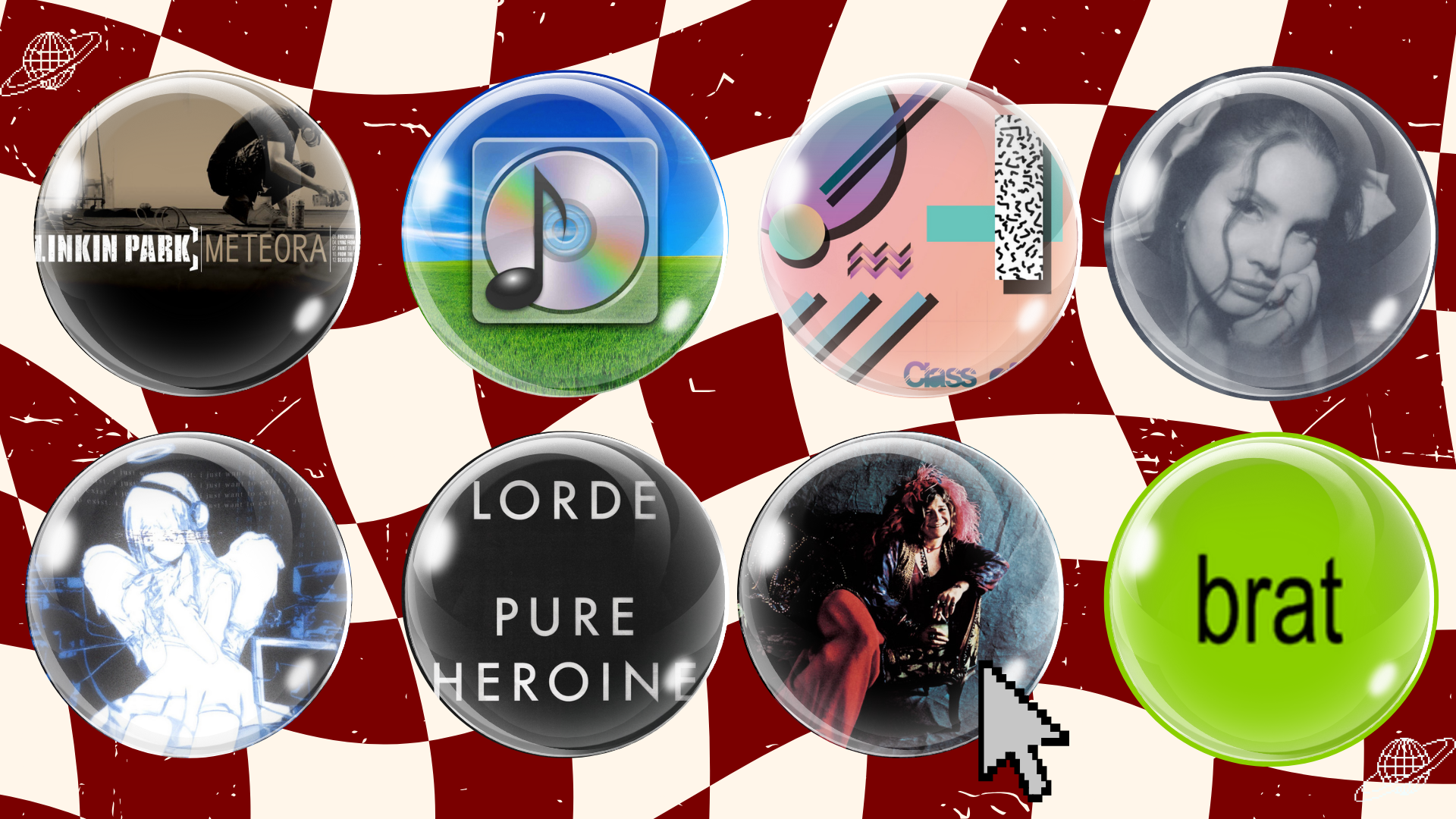
Artwork by Sharanyaa Nair
If you were creating hyper-specific moodboards or finding Pinterest inspiration for a niche reference that only you and your three-person group chat were aware of, then congratulations, you were already a part of the online phenomenon of internet aesthetics. Be it curating playlists or re-blogging pictures, these digital microgenres, which were primarily proliferated via social media platforms like Instagram, Pinterest, YouTube and Tumblr, were the early precursors of what is now mainstream culture, lifestyle and entertainment.
Easily recognizable by suffixes like “core,” “punk,” and “wave”, their origins date back to the 80s, wherein niche literary genres like “Cyberpunk” were just starting to gain momentum. Fast forward to the early 2000s, music and internet platforms such as “Myspace” gave rise to distinct visual styles like “indie sleaze” and “mall Goth.” Cut to the present, the post-pandemic world revolves around a flurry of nostalgia bait, algorithms and lifestyle-based microtrends, such as “cottagecore,” “coquette,” and “Dark Academia.”
All in all, the internet is our post-digital archive. So are our wardrobes and playlists, steeped in nostalgia. Be it the bands we stanned, the designers we fawned over or the blogs we posted, our online tastes are anthropological pit-stops, a reflection of our growing identities.
That being said, have you ever wondered which internet aesthetic speaks to your soul? Read below and find out.
Older Brother Core
Whether it’s shredding the electric at “Guitar Hero” or dressing like an extra in a Nirvana video, we’ve all known somebody like this at some point. The biblical equivalent of Reese Wilkerson (Justin Berfield), Rodrick Heffley (Devon Bostick) and Prateek (Armaan Verma) from Ra.One, this aesthetic is reminiscent of the 1990s and early 2000s—an inherently masculine archetype of chaos and rebellion, defined by radioactive colors, video game soundtracks, and alternative music.
If your room has always been clobbered with bulky PCs, Call of Duty posters, and strewn energy drink cans, you might be the quintessential “Older Brother.” Here, the messy bedroom becomes a shrine of entertainment, buzzing with distorted grunge riffs and angsty, moody energy. The aesthetic feels oddly comforting, like bumping into an old, troublemaking friend.
Frutiger Aero
You remember the sound of the old iPhone ringtone and the glossy blue of Windows Vista? That’s Frutiger Aero at its finest, an aesthetic that defined our Web 2.0 childhood. A digital Eden of ethereal tech, it is a memorable aesthetic that is characterized by ambient soundscapes, glossy textures and nature-centric visuals.
Coined in 2017 by Sofia Lee, a member of the Consumer Aesthetics Research Institute, it reigned as the supreme design language, marking a period of technological transition. Its influence extended beyond visuals into sound, to other genres such as recession, electro and hyper pop. With synth-heavy layers, distorted effects, IDM-style palettes, and airy vocals rooted in Y2K futurism, it carried a distinctly futuristic mood.
If you still miss Windows 7 and find yourself retreating to nature at the slightest inconvenience, chances are you’re Frutiger Aero personified.
Vaporwave
If you had “Macintosh” on repeat in your playlist, you already know what comes next. A trickled-down product of Hypnagogic pop and electronic music, Vaporwave has an uncanny yet atmospheric soundscape, the kind that plays while wandering in abandoned spaces. Drenched in distortion and reverb, it’s deliberately artificial, drawing from ’80s and ’90s R&B, lounge, and jazz.
Borrowing heavily from Memphis design, the aesthetic spills across both music and art. Think of it as a post-capitalist collage: a commentary on consumerism and the futuristic “utopia” that never materialized. Roman statues float alongside Japanese text, pastel gradients wash over screens, and warped Windows 95 interfaces flicker with trippy nostalgia.
A hybrid of the archaic and the digital, Vaporwave continues to attract the creative, the philosophical, and the delightfully apathetic—those who find comfort in a warped blast from the past.
Thought Daughter
Hug your fellow writers, filmmakers and artists—they probably need one. Rivaling the protagonists of a Greta Gerwig movie, the “thought daughter” emerged as a media-obsessed, intellectualist archetype, with tastes orbiting around “esoteric” fashion, film, and music.
What began as a meme (Gay son vs. Thot daughter) quickly matured into a full-blown identity. Defined by perpetual overthinking, she’s haunted by metaphors and symbols while Lana Del Rey hums in her headphones at 5 p.m. on public transport. Antiquity is her comfort zone: vintage French cinema, niche perfumes and leather-bound journals.
Her playlists are grief-stricken mosaics. Be it Phoebe Bridgers, Jeff Buckley, Adrienne Lenker, Jagjit Singh, or Rekha Bharadwaj, the songs trace the five stages of mourning. Melancholy is her muse, and her Notes app is littered with fragments of the magnum opus she’s been drafting in transit.
Cyber Angel
If Serial Experiments Lain were a playlist, this would be it. Otherworldly and ethereal, Cyber Angel feels like scrolling through forgotten internet archives searching for obscure anime, underground DJs, and eccentric architects. Born of the Tumblr era, it thrives in VHS overlays, robotic-celestial imagery, and soft blue glows. A hybrid of retro-futurism, sci-fi, and early-2000s Y2K aesthetics, it extends beyond visuals into fashion and accessories. Nostalgia here comes cloaked in angelic motifs: chromatic color schemes, layered images, video game iconography, and luminous halo-like filters.
For those who grew up worshipping Neon Genesis Evangelion and treating the old internet as sacred ground, Cyber Angel is less an aesthetic and more a digital sanctuary.
2014 Tumblr
The holy blueprint: flower crowns, velvet chokers, and unfiltered trauma dumping. Tumblr was the epicenter of one of the biggest contemporary aesthetic movements, endlessly referenced and recycled. In the age of hedonism, unhealthy coping mechanisms and restless re-blogging, the platform became a playground where people hand-picked and curated their identities.
Fandom and alternative fashion culture—especially Japanese subcultures—shaped the very idea of “cool,” spawning a spectrum of styles: pastel grunge, kawaii, indie sleaze, hipster, and beyond. The playlists carried the weight of teenage angst, soundtracked by The 1975, Lorde, the F16s, and Peter Cat Recording Co.
Even today, it continues to be resuscitated, in wardrobes and Instagram grids. If you’ve not cried to Lorde’s “Ribs” while returning home drunk from a house party, were you even there?
Rockstar Gf
If you’ve ever wanted to live on tour buses and shred out guitar riffs and re-watch Almost Famous at any given time, the Rockstar GF would come to you as second nature. Rooted in the groupie and rock subcultures of the ’60s, ’70s, and ’80s, it borrows heavily from their fashion codes: smudged eyeliner, vintage leather jackets, oversized fur coats, and cigarettes-as-accessories.
messy yet glamorous It nods to trailblazing women like Janis Joplin, Joan Jett and Courtney Love, embodying an imperfect, chaotic state of mind that stands in stark contrast to today’s polished “clean girl” epidemic. Post-pandemic, this messy-yet-glamorous rock haven has found new resonance, introducing fans to artists like Tribemama Mary Kali, Ecca Vandal, and Victoria De Angelis, who are reshaping what it means to be a woman in rock.
Hyperpop
If you’re equal parts bubbly and chaotic, hyperpop is your jam. Created by the internet, for the internet, it emerged in the UK during the 2010s as a high-pitched, energizing microgenre that felt like a caffeine high and a sugar rush all at once.
A by-product of electronic music and EDM, it was popularized by AG Cook’s recordPC Music, which represented LGBTQIA+ artists, such as SOPHIE and Charli xcx, moulding an underground soundscape of queer liberation, feminism, DIY rebellion and identity. Made with bedroom software like Audacity and GarageBand, hyperpop is defined by distortion, pitched-up vocals, rapid tempo shifts, sound effects, and relentlessly catchy hooks.
Visually, it’s pure glitchcore—bubblegum pinks, surrealist flourishes, and meme-heavy Web 2.0 aesthetics. The genre’s cultural tipping point came with 100 gecs, who blasted hyperpop into the mainstream, while Lizzy Szabo’s 2019 Spotify playlist Hyperpop helped give it a global stage. The pandemic years only amplified its reach, with songs like “Sugar Crash” fueling chaotic bedroom raves. If you thrive on drama, speak in postmodern fragments, and feel more like a concept than a person, you’re already one playlist away from your hyperpop era.
The Mumbai pop artist collaborates with Rutwik Talashilkar, Amandeep Singhsoni and Shloke Lal on a…
From recreating their Super Bowl commercial choreography to teasing new music, here's everything that went…
The musician previewed new material from the record, out April 17, during his residency at…
On The Fall and Rise of Reggie Dinkins, the rapper portrays a divorced mother who…
“What you have achieved is not just a historic musical accomplishment, it’s a cultural and…
The so-called “pharma bro” alleges RZA engaged in a “duplicate sale” of copyright interests that…

